The Lord’s Prayer: The Power of Forgiveness
One of the fundamental principles of the Christian faith is forgiveness. We could call it part of the Christian’s code of conduct. It sets the child of God apart from the spirit of this world and draws us closer to the Lord.
Jesus taught us to pray:
“And forgive us our debts, as we forgive our debtors.”
—Matthew 6:12
These are solemn words. We ask God to forgive us while declaring that we are willing to forgive those who have wronged us. Jesus continued:
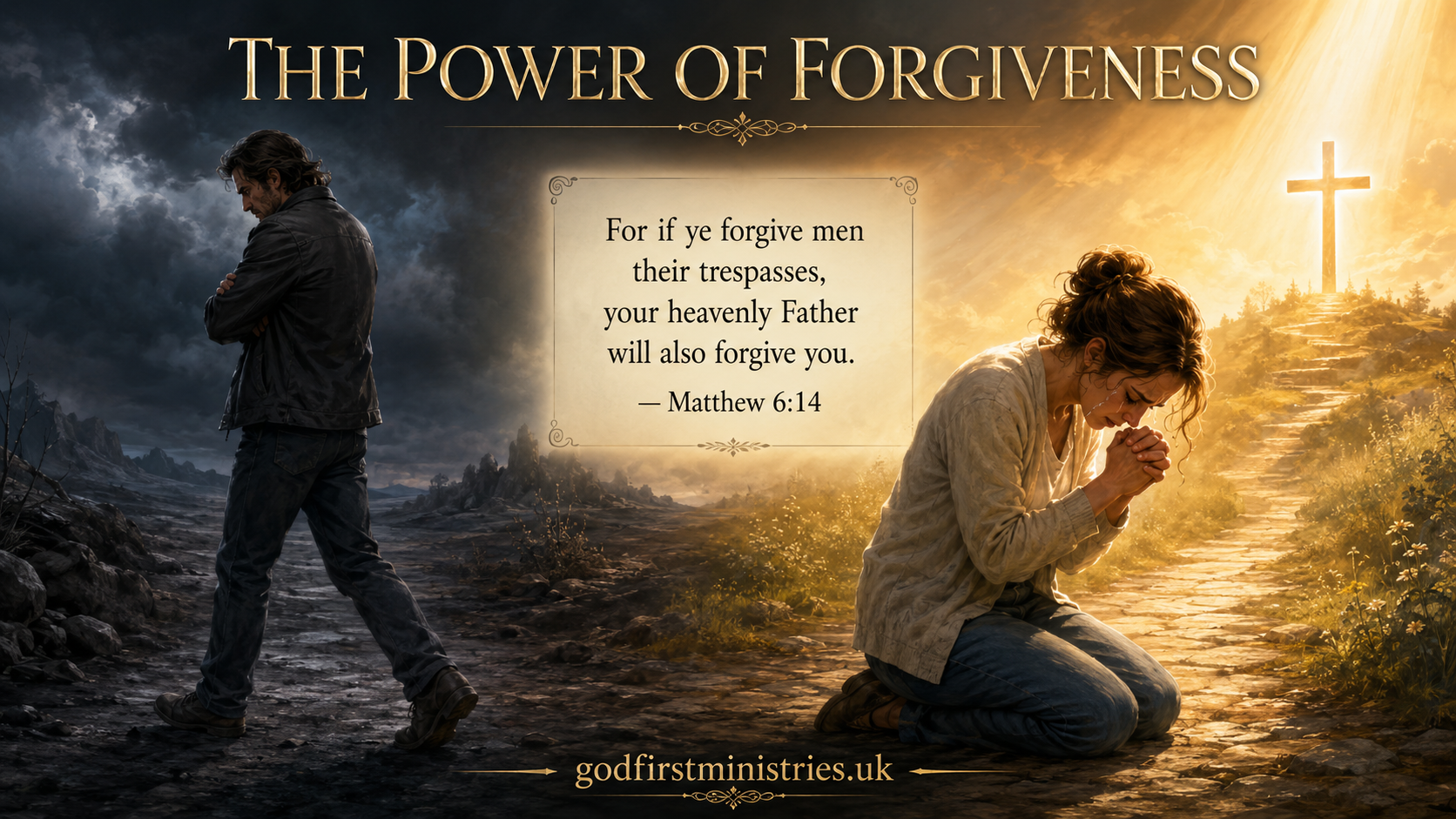
“For if ye forgive men their trespasses, your heavenly Father will also forgive you.”
—Matthew 6:14
God’s forgiveness cannot be earned by our good works. We are saved by grace through faith in the finished work of Jesus Christ. Nevertheless, a heart that has truly received God’s mercy should become willing to show mercy to others. If we refuse to forgive, we must seriously examine the condition of our own hearts.
Your pastor may disappoint you. Your church may fail you. Your friends may desert you, and, saddest of all, even members of your family may reject you. But although everyone else may fail, Jesus never will. Christ will never abandon those who trust in Him.
Jesus said:
“If any man will come after me, let him deny himself, and take up his cross, and follow me.”
—Matthew 16:24
Someone once asked me, “George, how is it possible to forgive when the memory of what that person did keeps returning and the pain becomes fresh again?”
My answer was this: forgive them again whenever the memory returns. Forgiveness is sometimes not a single moment but a decision we must renew before God. An old saint of God once spent hours upon his knees, seeking the Lord until God healed the hurt within his heart. When we have been deeply wronged, the wound may leave a scar, but we must continue bringing it to Jesus. For the sake of our spiritual wellbeing, we must not allow bitterness to take root.
Forgiveness does not mean pretending that nothing happened. It does not mean approving of sinful behaviour, remaining in danger or allowing someone to mistreat us repeatedly. We can forgive while maintaining wise boundaries. Forgiveness releases the matter into God’s hands; trust, however, may need to be rebuilt over time.
I once heard about an unbelieving person who tried to undermine a Christian. This person said something unkind and expected the Christian simply to turn the other cheek. When the Christian defended himself, the person was devastated and complained to a friend. The friend replied, “How many cheeks do you think a Christian has?”
Later, the Christian asked this woman why she had defended him, even though she hardly knew him. She explained, “My son is a Christian, and the people where he works give him a very hard time.”
Sometimes people recognise the unfair treatment Christians receive, even when they do not share our faith.
We may never fully understand why some people treat us cruelly. Nevertheless, Christ calls us to forgive—even those who deliberately seek to harm us. This does not mean pampering wrongdoing or ignoring injustice. It means refusing to allow hatred and bitterness to rule our hearts.
Where would any of us be if Jesus had not loved and forgiven us? The Church would flourish if forgiveness burned within it like a fire that could not be extinguished. Respect must often be earned, and trust may need to be restored, but forgiveness should be freely offered because the Lord Jesus Christ has so freely forgiven us.
If we are going to hate anything, let us hate sin—but let us love people and pray for their salvation.
God knows. God loves. God cares.
Old Blog redone 31/08/2026
God Knows God Loves and God Cares
Written for Georges Web Ministries
Leave a Reply